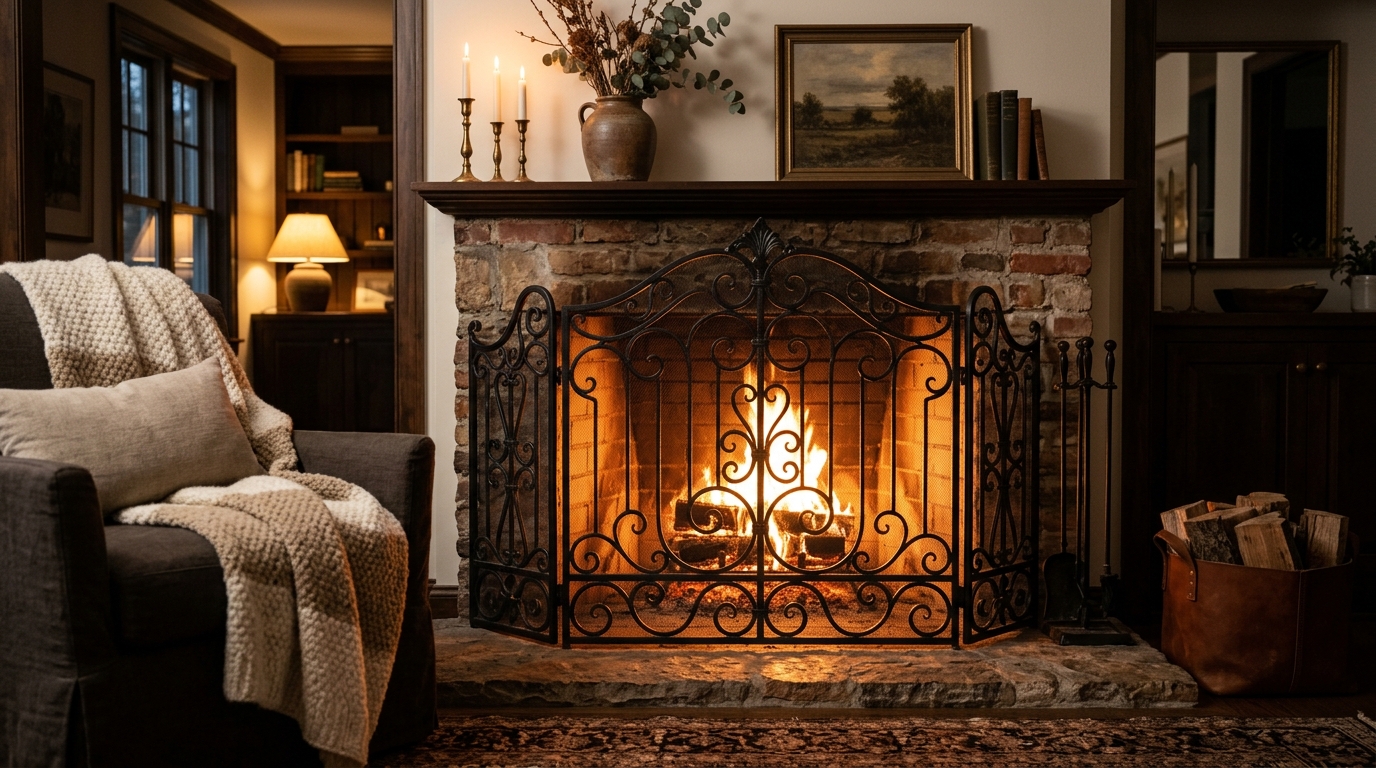
How Do I Choose the Right Fireplace Screen?
Choose right fireplace screen by evaluating five criteria: safety certifications (UL 1278), proper sizing (4-6" wider than opening), mesh density (0.25" gaps max), frame material (wrought iron preferred), and stability (non-tip base).
The National Fire Protection Association (NFPA) mandates 36" clearance between screens and combustibles. For wood-burning fireplaces, select screens with:
- ASTM E136-rated materials (withstands 1,200°F)
- Interlocking mesh panels (prevents spark escape)
- Weighted bases (minimum 8 lbs for freestanding models)
Most buyers miss this: Screens for gas fireplaces need less heat resistance but require tighter mesh (0.18" gaps) to block smaller embers.
View professionally measured screens with UL-certified construction.
What Are the Main Types of Fireplace Screens?
The three main fireplace screen types are freestanding (58% market share), wall-mounted (32%), and retractable (10%), each suited to different installations and safety needs.
| Type | Installation | Best For | Avg Price Range | |
| ----------------- | ------------------- | ------------------------ | ----------------- | |
| Freestanding | No tools needed | Renters, multi-hearth homes | $80-$250 | |
| Wall-mounted | Permanent brackets | High-traffic areas, households with pets | $150-$400 | |
| Retractable | Track system | Modern fireplaces, space-saving | $300-$800 |
Freestanding fireplace screens dominate due to portability but tip over 23% more often than mounted models (Consumer Reports). Wall-mounted fireplace screens provide superior stability but require drilling into masonry or framing.
Which Fireplace Screen Material Lasts Longest?
Wrought iron fireplace screens last 10-15 years—twice as long as powder-coated steel—due to inherent heat resistance (ASTM E136 Class A) and 2.5mm minimum thickness standards.
Material durability rankings:
- Wrought iron: 1,400°F tolerance, develops protective patina
- Brass: 1,200°F tolerance but requires polishing every 6 months
- Powder-coated steel: 800°F max, chips after 3-5 years of use
Powder-coated vs bare metal: Coatings add color options but reduce heat dissipation by 18% (UL Fire Safety Journal). For coastal homes, brass resists salt corrosion 37% better than iron.
See material care timelines for each type.
How to Measure for a Fireplace Screen Correctly?
Measure fireplace screens by adding 4-6" to the opening width, 2-3" to the height, and matching the hearth depth within 1" tolerance.
Step-by-step:
- Width: Measure at top, middle, and bottom—use the largest number plus overlap
- Height: From hearth floor to lintel top (add 2" for spark buffer)
- Depth: Most screens need 16"-18" depth for proper airflow
For irregular fireplace openings, custom screens should follow the NFPA 211 standard requiring:
- No gaps >0.5" at sides/top
- Mesh extending below grate level
What Safety Features Should a Good Fireplace Screen Have?
UL 1278-certified fireplace screens must have heat-resistant mesh (0.25" spacing), a weighted base (≥10% of screen weight), and non-combustible frame materials.
Critical safety specs:
- Mesh weave density: 16×16 wires per inch minimum
- Frame thickness: 1/8" steel or 3/16" iron
- Child safety: Magnetic latches withstand 15 lbs of pull force
Child safety considerations: Retractable screens should auto-lock when closed (tested to 50,000 cycles). Freestanding models need a 45° tilt test pass per ASTM F2057.
Fireplace safety FAQ covers screen anchoring methods.
Can a Fireplace Screen Match My Existing Decor?
63% of designers recommend matte black wrought iron fireplace screens for transitional decor, while brass suits traditional interiors and perforated steel fits modern spaces.
Finish matching tips:
- Match screen metal to fireplace toolset finishes
- For painted surrounds, choose screens with identical sheen (e.g., satin)
- Copper screens develop patina that complements rustic decor
Seasonal style switching: Lightweight powder-coated screens (under 15 lbs) allow easy storage changes. Avoid glass panels in homes with UV exposure—they show haze after 2 years.
Decor coordination guide shows style pairings.
What's the Bottom Line on Choosing Right Fireplace Screen?
Prioritize safety certifications and proper sizing—aesthetics come second for fireplace screens.
- Mandatory: UL 1278 or ASTM E136 certification
- Ideal overlap: 6" wider than opening, 3" taller
- Best value: 14-gauge wrought iron (lasts 12+ years)
- Renter solution: Freestanding with 10 lb sand-filled base


