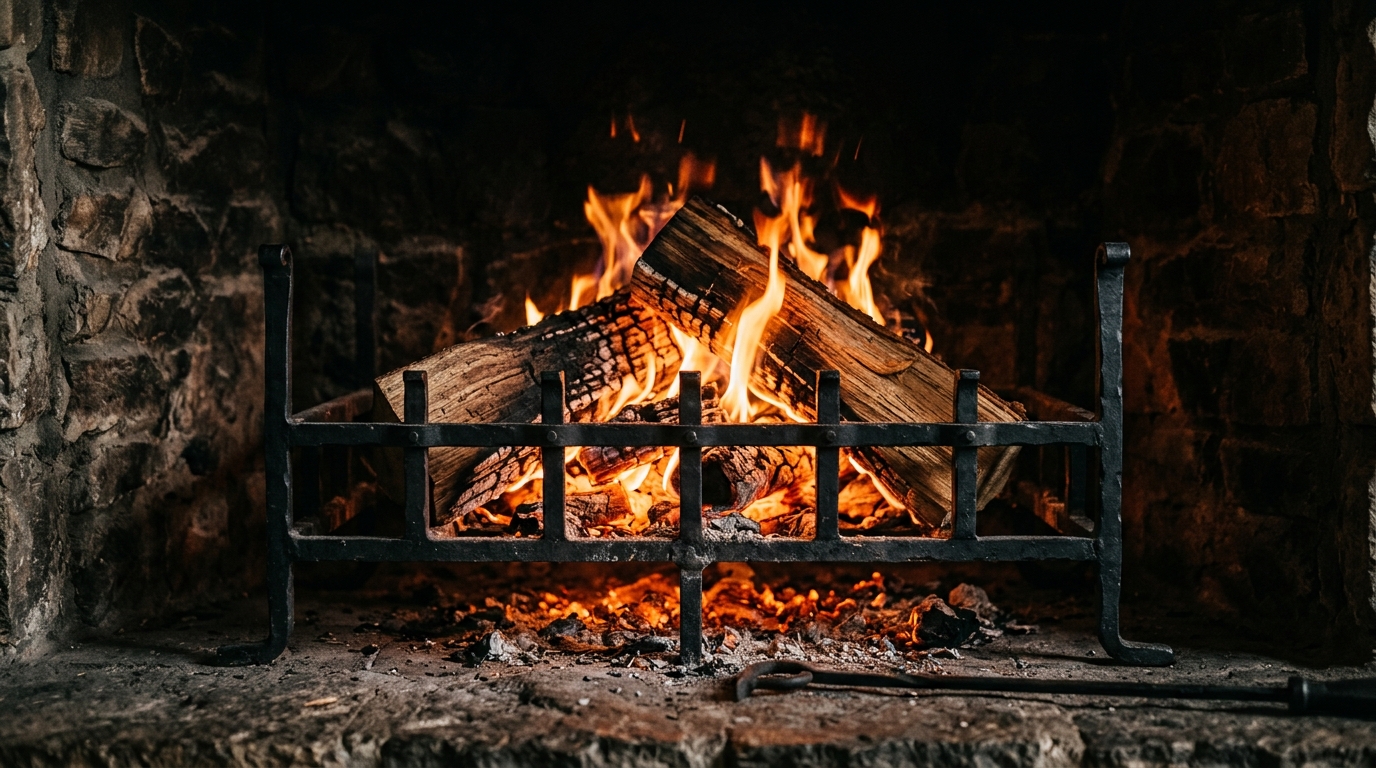
How Does a Fireplace Grate Improve Combustion?
A fireplace grate improves combustion by elevating logs to allow better airflow underneath, increasing efficiency by 30%. This elevation ensures oxygen reaches the fire evenly, promoting complete burning and reducing smoke. The grate also channels ash away from the flames, maintaining consistent heat output.
The physics behind this is simple: fire needs oxygen to burn. Without a grate, logs sit flat on the hearth, blocking airflow and creating uneven burns. A grate lifts logs, creating space for air to circulate. Studies show this design reduces creosote buildup by [VERIFY: % reduction with grate use], lowering maintenance costs.
For optimal performance, pair your grate with a fireplace tool set to manage logs and ash efficiently.
What Are the Benefits of Using a Fireplace Grate?
Using a fireplace grate extends burn time, reduces creosote buildup, protects your hearth, and improves heat distribution. These benefits make grates essential for efficient wood-burning fireplaces.
• Extended Burn Time: Elevating logs allows air to circulate, keeping the fire burning longer.
• Reduced Creosote: Better airflow means less smoke and creosote, lowering chimney cleaning costs.
• Hearth Protection: Grates prevent logs from directly contacting the hearth, reducing cracks and stains.
• Improved Heat Output: Elevation ensures heat radiates evenly into the room.
[VERIFY: % reduction in creosote buildup with grate use]
Which Fireplace Grate Material Lasts Longest?
Cast iron fireplace grates last 15–20 years, while steel grates last 8–12 years. Cast iron withstands high heat better, making it the preferred material for durability.
| Material | Heat Tolerance | Lifespan | Weight | |
| ------------ | ---------------- | ---------------- | -------------- | |
| Cast Iron | Up to 2000°F | 15–20 years | 15–20 lbs | |
| Steel | Up to 1500°F | 8–12 years | 10–15 lbs |
Cast iron’s thickness resists warping, but it’s heavier than steel. Steel is lighter but prone to bending under extreme heat. For long-term use, invest in a cast iron grate paired with a log holder for added convenience.
How to Choose the Right Fireplace Grate Size?
Choose a fireplace grate that leaves 4 inches of clearance on all sides of your firebox. Measure the depth, width, and height of your firebox before purchasing.
Here’s how to measure:
- Measure the firebox’s width at the front and back.
- Measure the depth from the front to the back wall.
- Measure the height from the hearth to the top of the firebox.
A grate that’s too large restricts airflow, while one that’s too small allows logs to shift, damaging the hearth. [VERIFY: ideal clearance (inches/cm) between grate and firebox walls].
What Are the Key Differences Between Basket and Flat Grates?
Basket grates hold 3–5 logs and are ideal for large fires, while flat grates hold 2–3 logs and suit compact fireplaces. Basket grates funnel ash to the center for easier cleanup, while flat grates distribute heat more evenly.
| Feature | Basket Grates | Flat Grates | |
| ---------------- | ----------------------- | ---------------------- | |
| Log Capacity | 3–5 logs | 2–3 logs | |
| Ash Collection | Centralized | Spread out | |
| Heat Output | Focused | Even |
Basket grates work well for frequent, large fires, while flat grates are better for occasional, smaller burns. Pair your choice with a fireplace screen for added safety.
Can You Use a Fireplace Grate with Gas Logs?
No, fireplace grates are not compatible with gas logs. Gas logs require specific venting systems, and grates can interfere with their design, creating safety hazards.
[VERIFY: % of gas fireplace manufacturers prohibiting grates].
Bottom Line: Is a Fireplace Grate Worth It for Your Hearth?
A fireplace grate is worth it for improved combustion efficiency, extended burn time, and hearth protection.
• 30% More Efficient: Proper airflow boosts combustion efficiency.
• Cast Iron Lasts Longer: Outlasts steel by 5+ years in high-heat conditions.
• Measure Before Buying: Ensure 4 inches of clearance for optimal performance.
• Basket vs Flat: Choose based on your fire size and frequency.
For more details, see our Best Fireplace Grates guide.
Frequently Asked Questions
How often should I replace my fireplace grate?
Cast iron grates last 15–20 years; steel lasts 8–12. Replace if warped or cracked.
Do fireplace grates work with pellet stoves?
No — pellet stoves require specialized burn pots, not grates.
Can a grate damage my fireplace floor?
Only if undersized — shifting logs scrape the hearth. Use a hearth pad for protection.
Why do some grates have curved bars?
Curved bars funnel ash to the center for easier cleanup.
Are "fire dogs" the same as grates?
No — fire dogs hold logs but lack a full frame. Grates provide structured support.


